
Dog enrichment
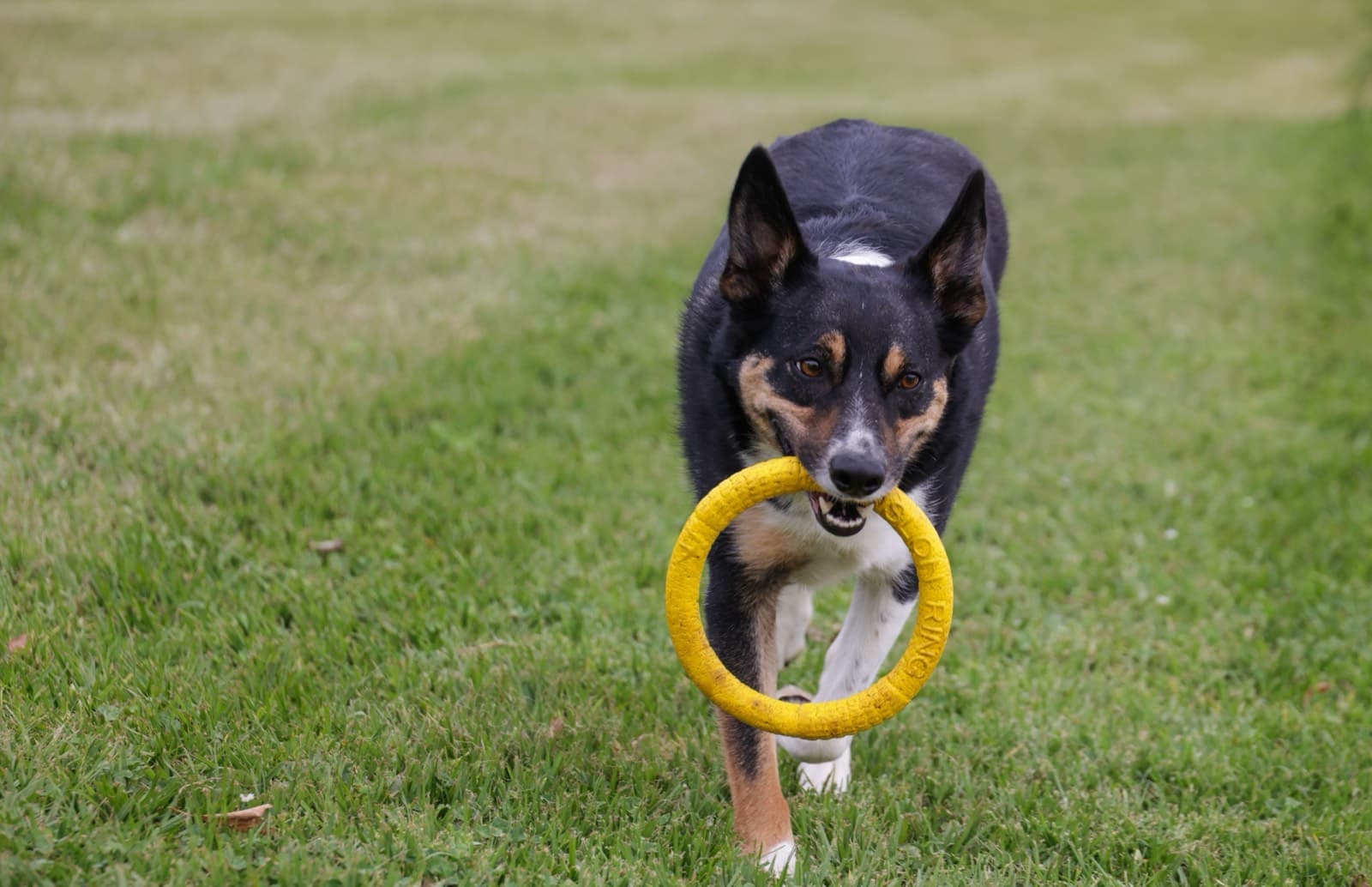
Enrichment is really just about giving your dog interesting and enjoyable things to do.
Walks and physical exercise are important, but dogs also benefit from using their brains, noses and natural instincts. Sniffing, searching for food, chewing, playing, exploring and learning new things can all be forms of enrichment.
The best part is that enrichment doesn't need to involve expensive toys or elaborate activities. Some of the easiest ideas use things you already have around the house.
Why is enrichment important?
Think about how your dog spends an average day.
They might get a walk in the morning and another in the evening, but there are still plenty of hours in between. Without much to do, some dogs will find their own entertainment.
Unfortunately, their idea of entertainment might involve digging up the garden, barking at everyone who walks past or discovering what the inside of a couch cushion looks like.
Providing appropriate things to do gives dogs an outlet for behaviours that come naturally to them.
Enrichment can also be useful for dogs adjusting to a new home. A simple sniffing or food activity can give them something enjoyable to focus on without expecting too much from them.
Let them sniff
One of the easiest forms of enrichment happens every time you go for a walk.
Dogs experience a huge amount of their world through smell. Giving your dog time to stop and sniff can make an ordinary walk much more interesting.
You don't always need to cover a huge distance.
Try taking a slower walk occasionally and let your dog choose where they'd like to sniff. You can also change your usual route so there are new smells and surroundings to investigate.
For dogs who aren't able to do lots of physical exercise, sniffing can be a particularly useful way to add more interest to their day.
Make meals more interesting
Your dog's dinner doesn't always have to arrive in a bowl.
Food is one of the easiest things to use for enrichment because your dog already needs to eat it.
You could try:
- Scattering dry food around the garden for your dog to find
- Using a snuffle mat
- Putting food into a puzzle feeder
- Using a slow feeder
- Filling a suitable food toy
- Hiding small amounts of food around a room
- Rolling dry food or treats inside a loosely folded towel
Start with something easy enough for your dog to work out.
If the puzzle is too difficult, they may simply become frustrated and walk away. Once they understand the game, you can gradually make it more challenging.
Remember to include food used for enrichment as part of your dog's normal daily intake, particularly if you're also using treats for training.
Try a treasure hunt
You don't need any special equipment for this one.
Ask your dog to wait in another room, then hide a few treats around the house or garden.
Make the first few easy to find. Once your dog understands what's happening, you can start using trickier hiding places.
You can also hide a favourite toy instead of food.
Watching a dog realise that they're supposed to search for something can be great fun, particularly once their nose takes over.
Use cardboard boxes
Before putting the recycling out, see if there's anything your dog might enjoy first.
A cardboard box can make a very simple enrichment activity. Put some treats or dry food inside and let your dog investigate.
Once they've got the idea, you can add scrunched-up paper or smaller cardboard boxes for them to search through.
Some dogs will delicately investigate the box.
Others will approach the problem by immediately destroying it.
Both can have a wonderful time.
Always supervise activities involving cardboard and remove pieces if your dog is likely to swallow them.
Puzzle feeders and food toys
There are plenty of commercially available toys designed to make dogs work for their food.
Some roll around and release pieces of food as the dog moves them. Others have compartments the dog needs to open or sections they need to lick.
Food toys can also be filled and frozen to make them last longer.
Choose something suitable for your dog's size and chewing style, and supervise them when introducing a new toy.
Check toys regularly for damage and replace anything that's starting to break apart.
Licking and chewing
Licking and chewing are normal dog behaviours and can be enjoyable ways for dogs to occupy themselves.
Lick mats and suitable food toys can encourage licking, while appropriate chew toys give dogs somewhere they're actually allowed to use their teeth.
Choose chews carefully.
Anything your dog can break into pieces or swallow can create a choking or intestinal blockage risk. Extremely hard objects can also damage teeth.
What works safely for one dog may not be suitable for a determined chewer, so consider your own dog's habits and supervise when necessary.
Play together
You can be part of your dog's enrichment too.
Games such as tug, fetch and hide-and-seek provide activity and give you something enjoyable to do together.
Different dogs have very different opinions about games.
Some could chase a ball all afternoon. Others will watch you throw it and appear slightly confused about why you've just thrown away a perfectly good toy.
Try different things and see what your dog enjoys.
Play should stay fun for everyone involved. If your dog becomes overly excited or the game stops being enjoyable, give them a chance to calm down before continuing.
Training counts as enrichment
Learning something new makes your dog think.
A few minutes of reward-based training can be a great enrichment activity, and you don't have to limit training to traditional commands.
You could teach your dog to touch your hand with their nose, find a particular toy, walk around an object, put their toys into a basket or learn a silly trick.
Keep sessions short and reward your dog when they get things right.
Training can be particularly useful on days when bad weather makes your normal outdoor activities difficult.
Give your dog opportunities to explore
New places come with new sights, sounds and, most importantly for your dog, smells.
Try taking a different walking route or visiting somewhere your dog hasn't explored before.
This doesn't need to mean a busy dog park or crowded cafe. For some dogs, those environments are stressful rather than enriching.
A quiet walking trail, a different neighbourhood or somewhere with plenty of interesting things to sniff might be much more enjoyable.
Pay attention to your dog's body language. Enrichment should be something they want to participate in.
What about social enrichment?
Spending time with people can be enriching for dogs, and some dogs also enjoy interacting with other dogs.
The important word is some.
A dog doesn't need to love meeting every dog they see. Plenty of dogs are happier with a few familiar dog friends, and some prefer human company.
If your dog enjoys playing with other dogs, an appropriate playmate can be great enrichment.
If they don't, there's no need to force social interactions or assume they need to visit a dog park to have a fulfilling life.
Rotate toys instead of leaving everything out
If your floor permanently looks like the toy aisle of a pet shop, try putting some of the toys away.
Leaving every toy available all the time can make them less interesting.
Keep a few out and rotate them every so often. An old toy can suddenly become exciting again when your dog hasn't seen it for a couple of weeks.
You can also pay attention to which types of toys your dog actually uses rather than continually buying more.
Enrichment doesn't need to be difficult
It's easy to see elaborate dog enrichment ideas online and think you need to recreate them.
You really don't.
A handful of dry food scattered through the grass can be enrichment. So can stopping for ten minutes of sniffing on a walk, learning a new trick, searching through a cardboard box or playing tug in the lounge room.
Try different activities and see what your dog enjoys.
Some dogs love solving puzzles. Some want to sniff everything. Some love shredding cardboard, carrying toys around or learning tricks.
Getting to know those preferences is part of the fun.
Keep enrichment safe
Whenever you introduce a new activity, think about how your particular dog is likely to use it.
Supervise new toys and homemade activities until you know they're safe for your dog. Avoid small pieces that could be swallowed and regularly check toys for damage.
Be mindful of how much extra food you're using too. Where possible, use some of your dog's normal meals for food-based enrichment rather than continually adding treats.
Most importantly, don't force your dog to participate.
If they aren't interested in the brilliant enrichment activity you've spent twenty minutes setting up, that's okay. Try something else next time.
Your dog will usually make their preferences pretty clear.
Have a question we haven't answered?
We're a volunteer team and we're happy to help, whatever brings you here.