
Bringing your dog home
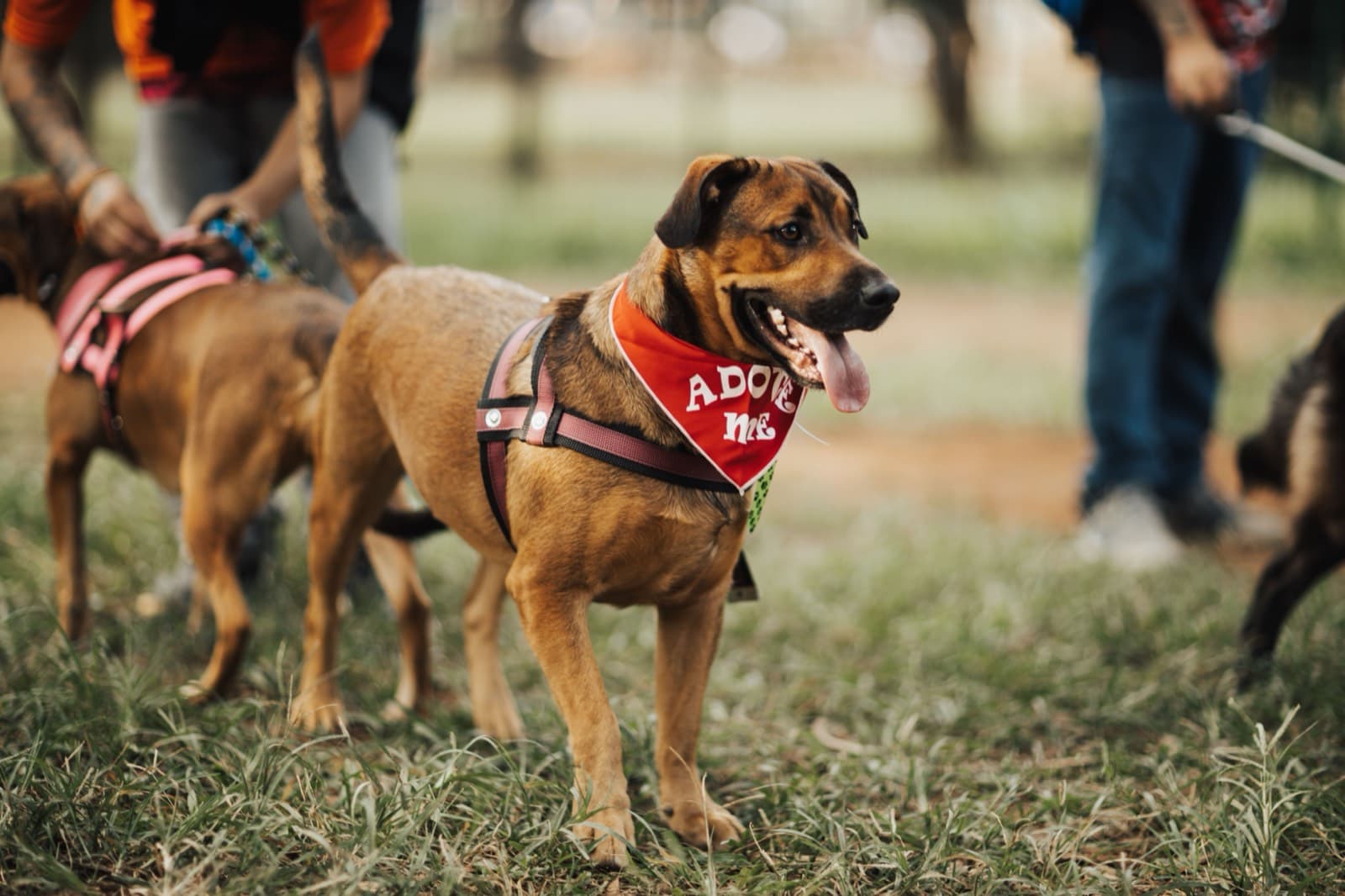
Bringing your adopted dog home is a pretty special day. You've probably been thinking about it for weeks, buying everything they need and imagining what life together is going to look like.
For your dog, though, it's another big change.
Even if they're coming from a wonderful foster home, they are suddenly in a new place with different people, smells, sounds and routines. They don't know yet that this is home.
Giving them some time to settle and keeping things simple in the beginning can make those first few weeks much easier for everyone.
Before your dog arrives
Try to have the basics ready before you bring your dog home.
You'll need food and water bowls, a comfortable bed, collar or harness, lead, toys and whatever food they've been eating in foster care. Your foster carer can let you know about their current routine and anything else they use regularly.
It's also worth doing a quick check around your home and garden.
Make sure fences and gates are secure, particularly if your dog will have access to a backyard. Put away anything they could chew or swallow and decide which parts of the house they'll have access to at first.
Set up somewhere quiet where your dog can rest. This might be a bed in the corner of the living room, a crate if they're already comfortable using one, or a quiet room.
Having somewhere they can retreat to is particularly useful in a busy household. Let everyone know that when the dog is resting there, they should be given some space.
Keep the first few days simple
It's tempting to make your dog's first few days a big welcome celebration.
You might want to take them to the pet shop, introduce them to friends and family, go for a big walk and show them every exciting thing about their new life.
There's plenty of time for all of that.
For the first few days, home is enough.
Let your dog explore at their own pace and start learning the rhythm of your household. Keep visitors to a minimum and avoid filling their days with new experiences.
Some dogs will confidently inspect every room and be asleep on the couch within an hour. Others might pace, hide, follow you everywhere or seem unusually quiet.
Give them time.
The 3-3-3 rule
You may hear people in rescue talk about the 3-3-3 rule.
It describes three rough stages a rescue dog may go through as they settle into a new home:
The first 3 days
Everything is new.
Your dog may be overwhelmed, nervous or unsure about what is happening. Some dogs won't eat much. Others might sleep a lot, struggle to settle or stay very close to you.
You may also see very little of their real personality during these first few days.
Keep things calm and predictable. Show them where their food, water and bed are, give them opportunities to toilet and let them approach you when they're ready.
The first 3 weeks
By now, your dog is starting to understand how life works in your home.
They're learning when meals happen, where they sleep, when you go for walks and who all the people in the household are.
You may start seeing much more of their personality.
Sometimes this is also when behaviours appear that you didn't see during the first few days. A dog who was very quiet at first might suddenly become playful and energetic. You might discover they bark at the postie, steal socks or get a little too excited when another dog walks past.
That's normal. They're becoming more comfortable and you're getting to know each other properly.
This is a good time to keep building routines and begin working on training using positive, reward-based methods.
The first 3 months
Over the following months, many dogs become much more comfortable and confident in their new home.
They know the routine, they've built relationships with the people around them and their new environment has become familiar.
You'll probably know a lot more about each other by this point too.
Remember that 3-3-3 is a guide, not a deadline. Dogs don't have calendars. One dog might be completely at home after a couple of weeks, while another may need several months before they fully relax.
Let your dog's behaviour tell you how they're coping.
Introduce new experiences gradually
Once your dog is starting to settle, you can gradually introduce more of the world around them.
Walks are a good example. Start somewhere relatively quiet and give yourself time to learn how your dog responds to things like traffic, bicycles, children and other dogs.
Dog parks are best avoided while you're still getting to know each other. You don't yet know how your dog will respond to every type of dog or situation, and an off-lead environment gives you much less control if they become uncomfortable.
The same principle applies to visitors, busy cafes, trips away and other adventures.
There isn't any rush to fit everything into the first week.
Introducing another dog at home
If you already have a dog, take introductions slowly.
Your foster carer may have already organised an introduction before the adoption was finalised, particularly if living with another dog was an important part of deciding whether the home was suitable.
Once your new dog comes home, continue supervising their time together.
Be thoughtful around things dogs might value, particularly food, treats and favourite toys. Feeding separately at first can be a simple way to give both dogs some space.
It's also a good idea to separate the dogs when nobody is home until you're confident they're comfortable living together.
They don't need to become best friends on day one. Give them time to work each other out.
Start practising alone time
If you've taken some time off work to bring your dog home, try not to spend every minute of every day together and then suddenly disappear for eight hours when you return to work.
Your dog needs to learn that being alone is safe too.
Start small.
That could mean giving them something enjoyable to do while you step into another room, then progressing to very short periods outside the house.
Build up gradually where you can.
If your dog becomes very distressed when left alone, such as persistent howling, frantic escape attempts or destructive behaviour, speak to your vet or a suitably qualified reward-based trainer for help.
Start building a routine
Dogs often find predictable routines helpful while they're adjusting to a new environment.
Meals at roughly similar times, regular toilet breaks, walks, periods of rest and a consistent bedtime routine can all help your dog understand what happens next.
You can start some basic training too.
Keep it simple and positive. Reward the behaviours you want to see and give your dog plenty of opportunities to get things right.
Training can also be a great way to get to know each other. A few minutes practising simple skills can help build communication and trust without overwhelming your dog.
Expect a few bumps along the way
The first few weeks with a new dog aren't always perfect.
There might be a toilet accident. Someone might lose a shoe. Your dog might bark at something completely ordinary or decide that the expensive bed you bought is less appealing than sleeping on the floor next to it.
You're both learning.
If something concerns you, ask for help early rather than waiting for it to become a bigger problem. Your dog's foster carer will often have useful insight into what worked while the dog was living with them.
For ongoing behavioural concerns, your vet or a qualified reward-based dog trainer can help you work out what's going on and how to manage it.
Give them time to feel at home
One of the nicest parts of adopting a rescue dog is watching them gradually settle in.
You start noticing little changes. They sleep more deeply. They learn where the treats are kept. Their favourite sleeping spot appears. They start bringing you a toy or waiting at the door when it's time for a walk.
There's no need to rush that process.
Keep the first few days quiet, build up new experiences gradually and give your dog the chance to learn that they're safe.
Before long, the new house that seemed so unfamiliar when they first arrived will simply be home.
Ready to meet your new best mate?
Browse the dogs currently looking for homes and find the one who's right for you.